The British EYFS Curriculum at Our Sharjah Nursery
We care for children from 1.5 to 4 years old, and we follow the British Early Years Foundation Stage — the EYFS — as our only curriculum.
That second part is worth saying plainly, because a lot of nurseries in Sharjah advertise two or three frameworks at once. We do one, properly: staff trained in it, observation and assessment that genuinely follow it, and progress reports built from what your child has actually done.
What the EYFS actually is
The EYFS is the framework used across British early years education for children from birth to five. It is not a syllabus and there is no textbook. It rests on a single idea: that very young children learn through play, repetition and exploration rather than instruction — and that an adult’s job is to notice, extend and gently steer rather than to deliver lessons.
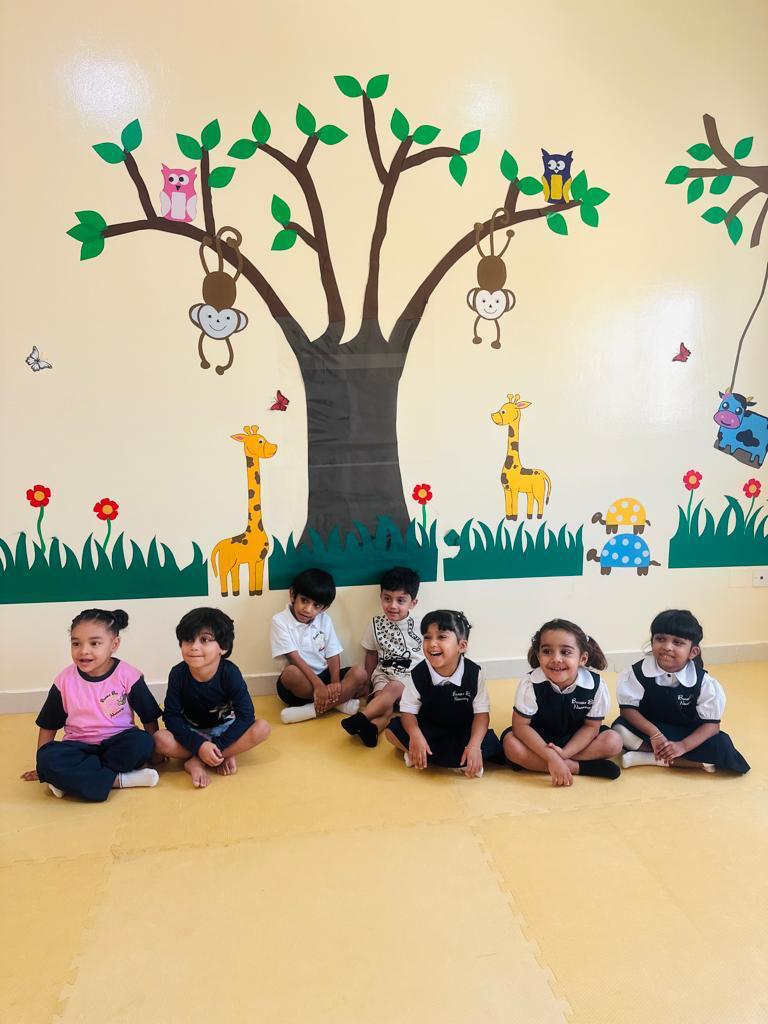
In practice that means your child will spend the day playing. Our teachers spend the day watching closely, recording what they see, and setting up whatever comes next.
The seven areas of learning
The framework organises learning into seven areas. Three are called prime areas, because everything else depends on them.
Communication and language
Listening, understanding and speaking. At eighteen months this looks like following a one-step instruction. At three it looks like telling you what happened at the weekend, roughly in order. Most of this work happens in ordinary conversation rather than planned activities — which is why we care so much about adults who narrate what is happening and then wait for an answer instead of filling the silence.
Physical development
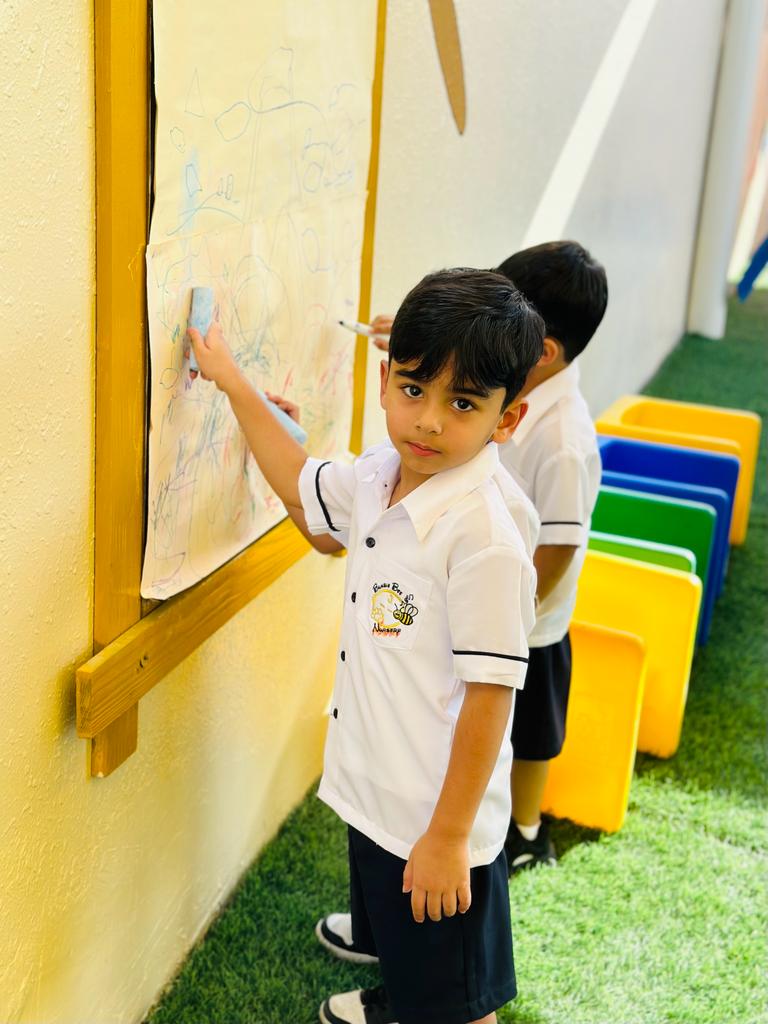
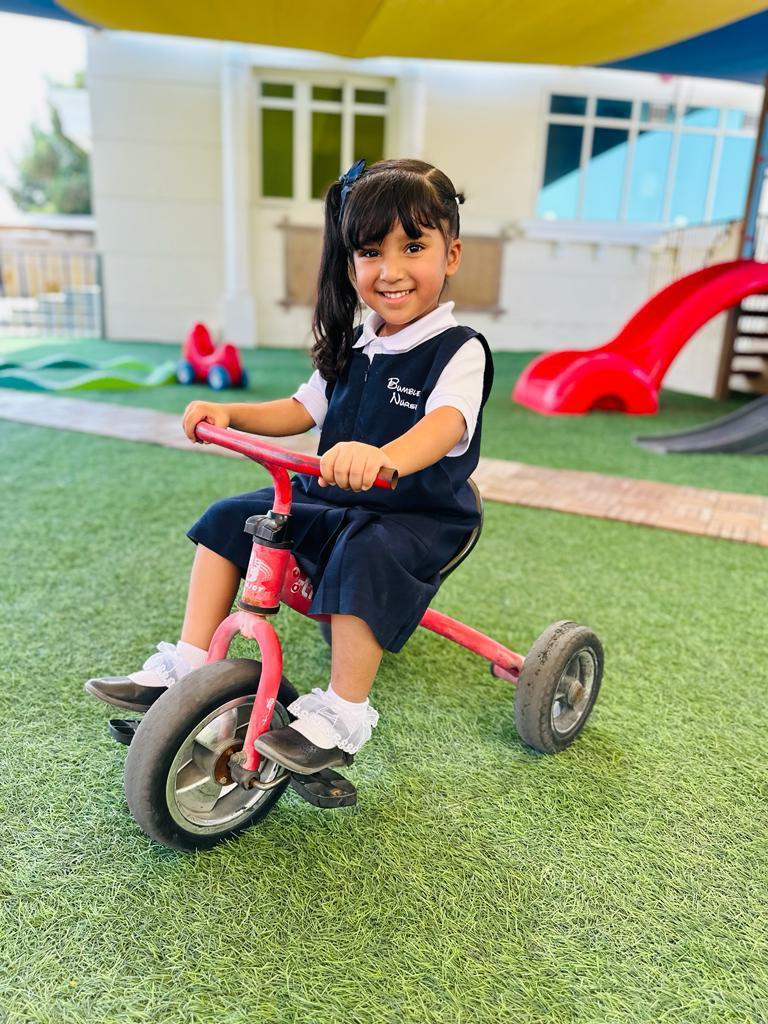
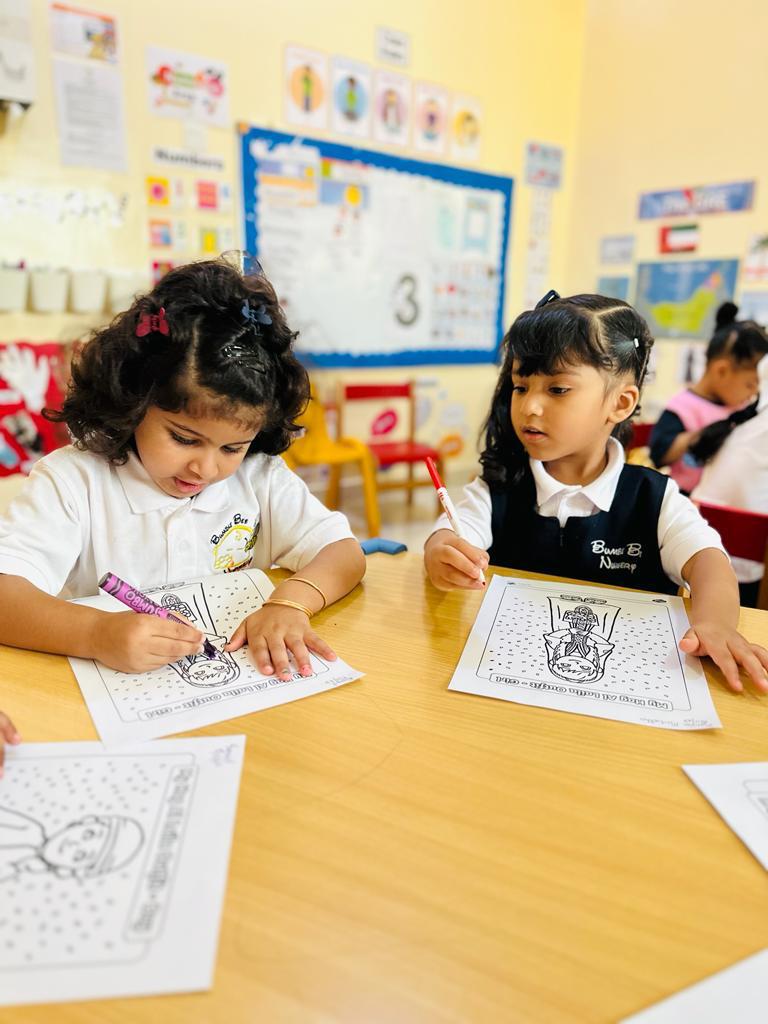
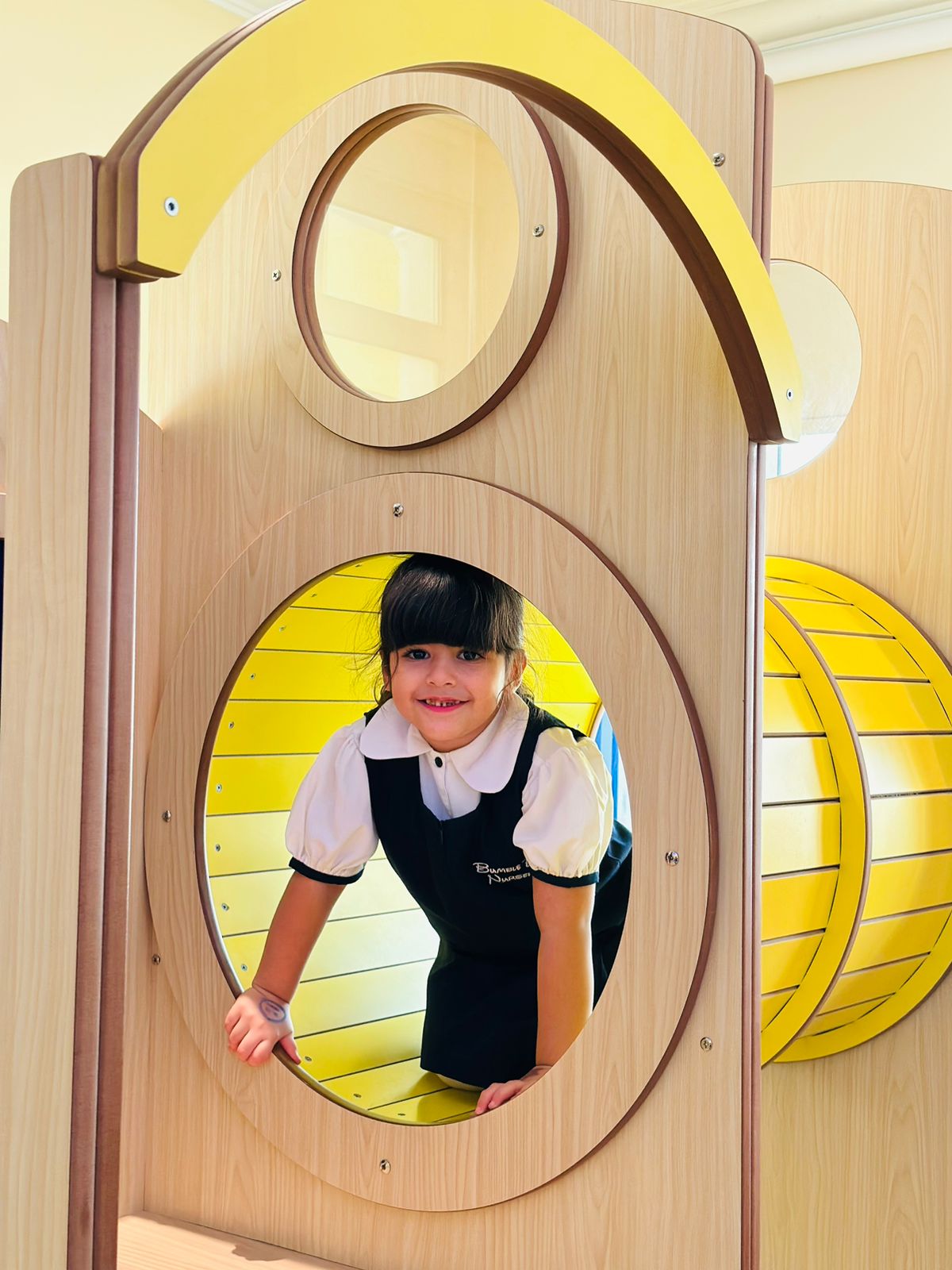
Two things at once. The large movements — running, climbing, balancing, stopping — and the small ones, which matter more than parents expect. Threading beads, using scissors, holding a crayon, pouring from a small jug. These are the foundations of handwriting. A child who cannot yet control a line cannot form a letter, however much they want to.
Personal, social and emotional development
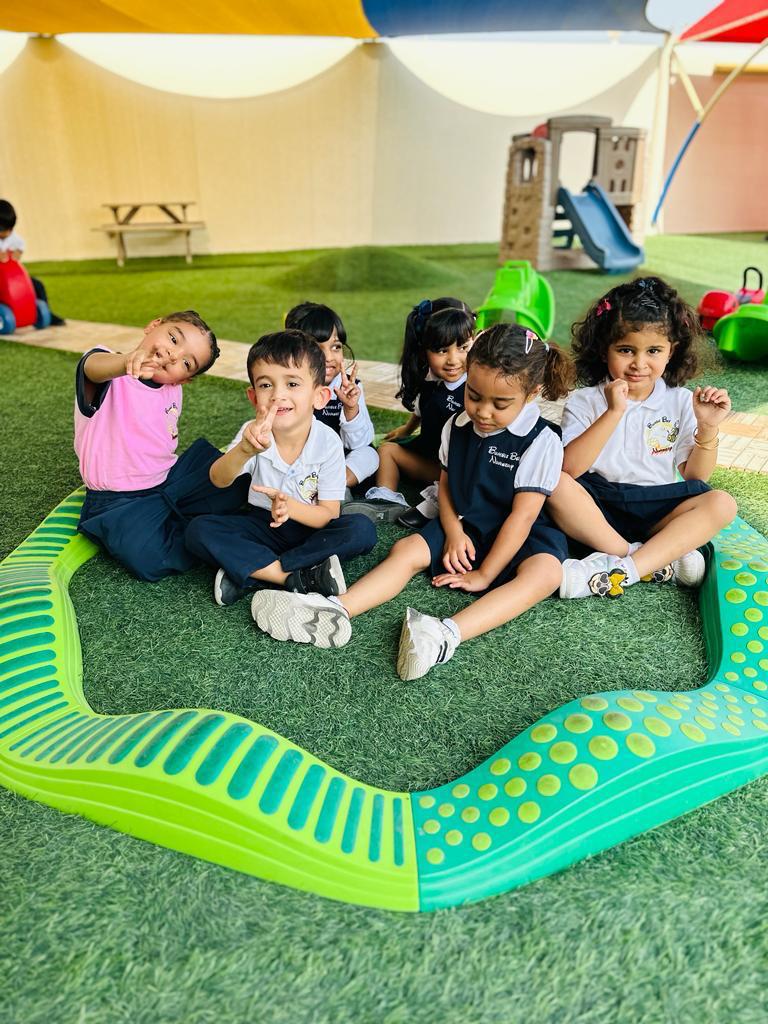
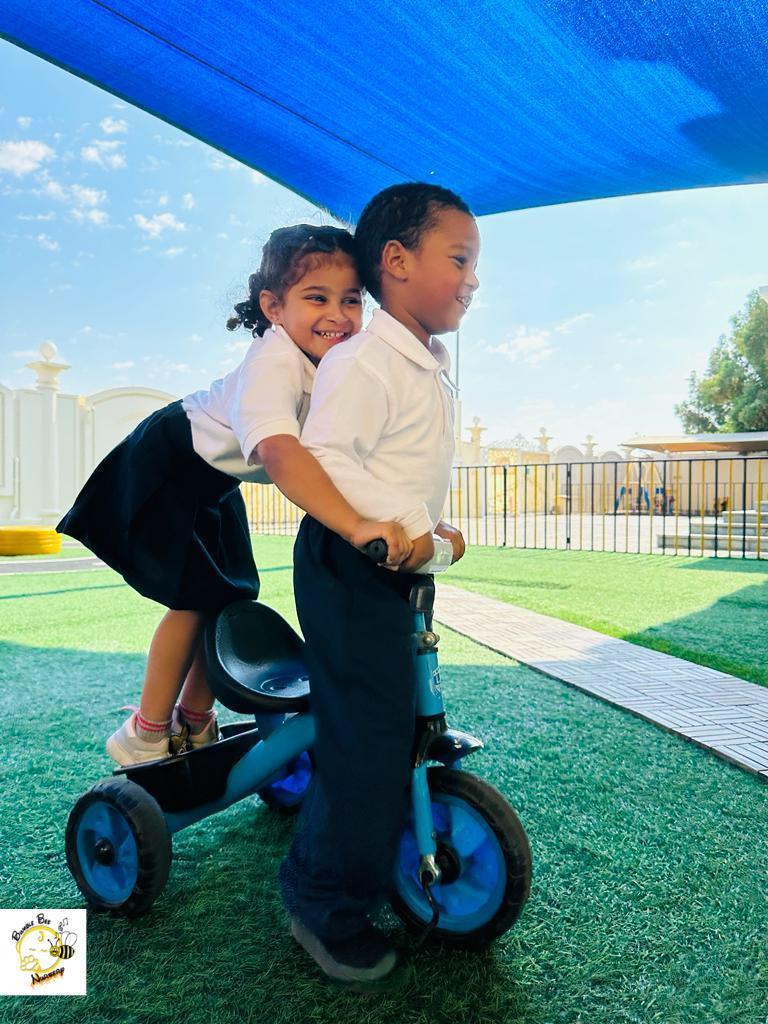
Confidence, friendships and the beginnings of managing feelings. Waiting. Sharing, which no two-year-old does naturally and every three-year-old is working on. Recovering from disappointment without the whole morning collapsing. Parents ask about this area least and it predicts most about how school will go.
The other four are specific areas, which grow out of the first three.
Literacy
Long before reading: recognising that marks on a page carry meaning, joining in with a familiar story, hearing that “cat” and “cup” start the same way. Mark-making comes before letter formation, and enjoying books comes before both.
Mathematics
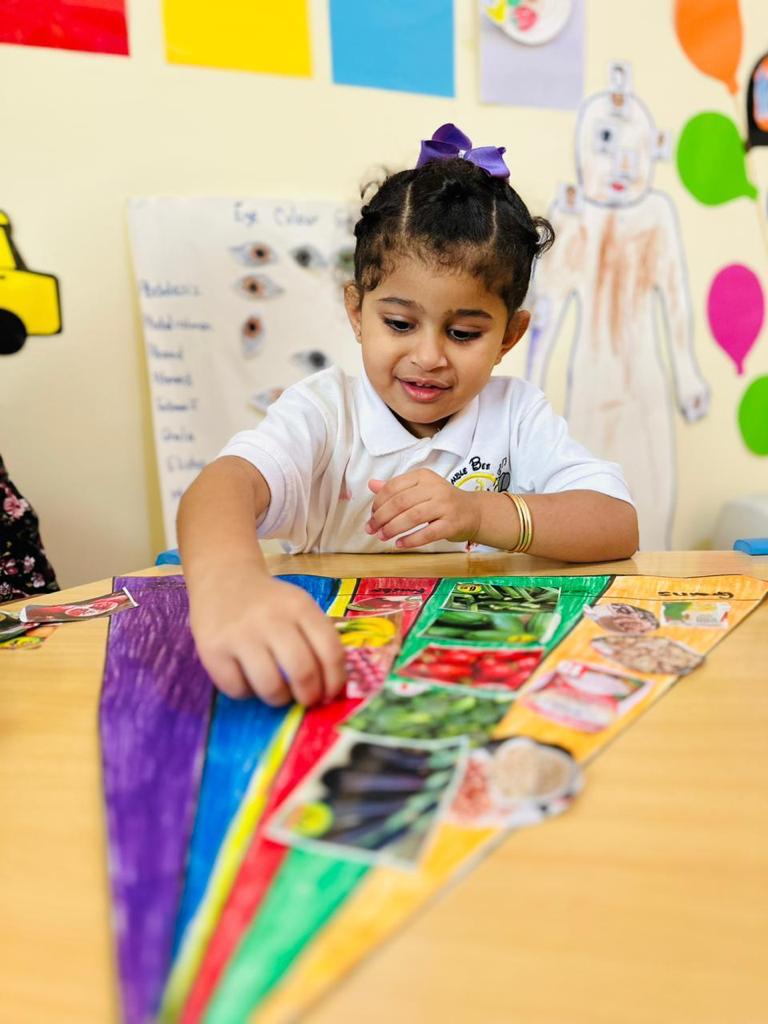
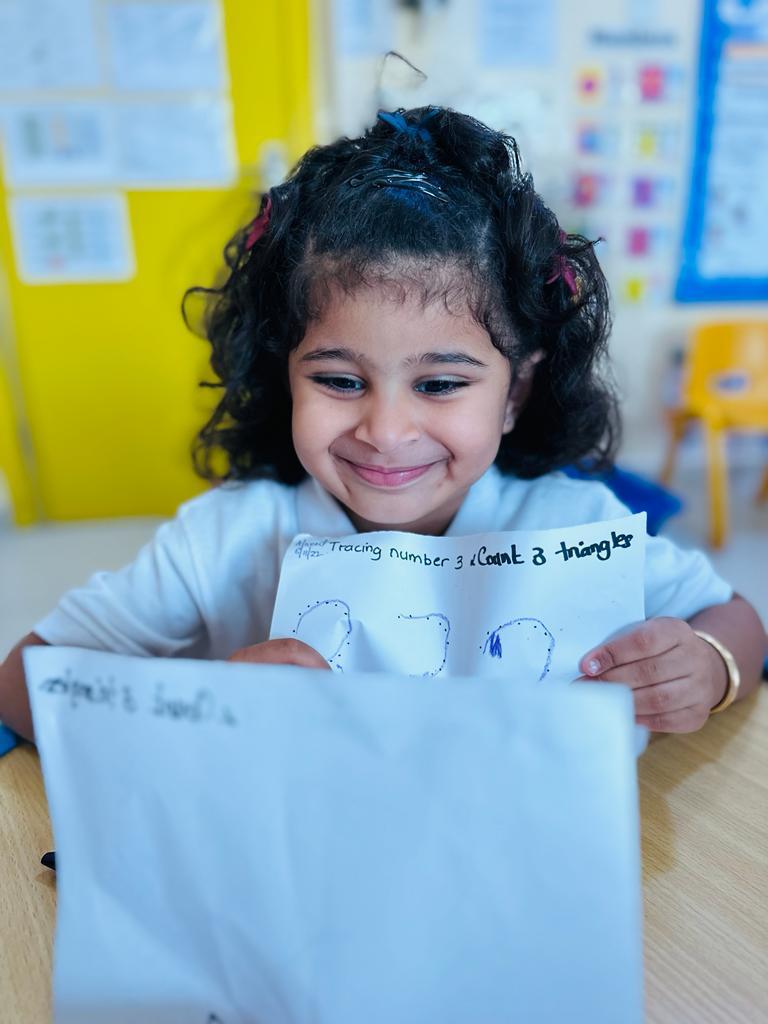
Counting with meaning rather than reciting, which are different skills. Noticing that one tower is taller. Sorting by colour, then by shape, then by two things at once. Spotting a pattern and continuing it.
Understanding the world
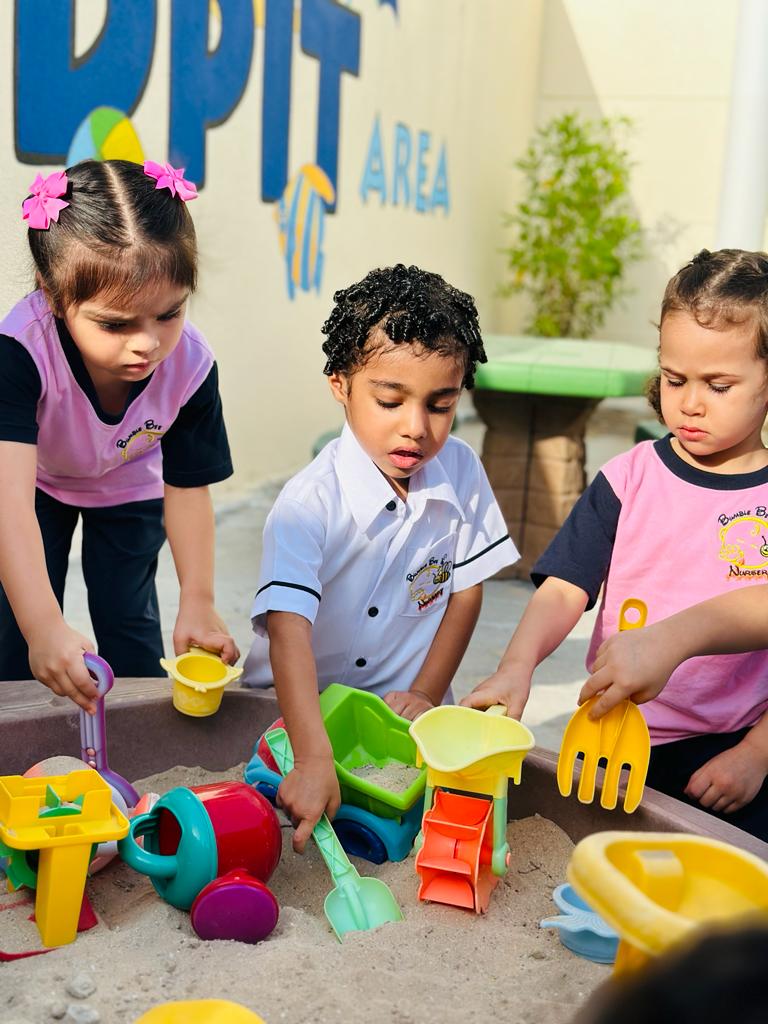
People, places, living things and how objects behave. Why the ice melted. What the gardener does. Who lives in your family and who lives in your friend’s. In a nursery as mixed as ours, this area does a great deal of quiet work.
Expressive arts and design
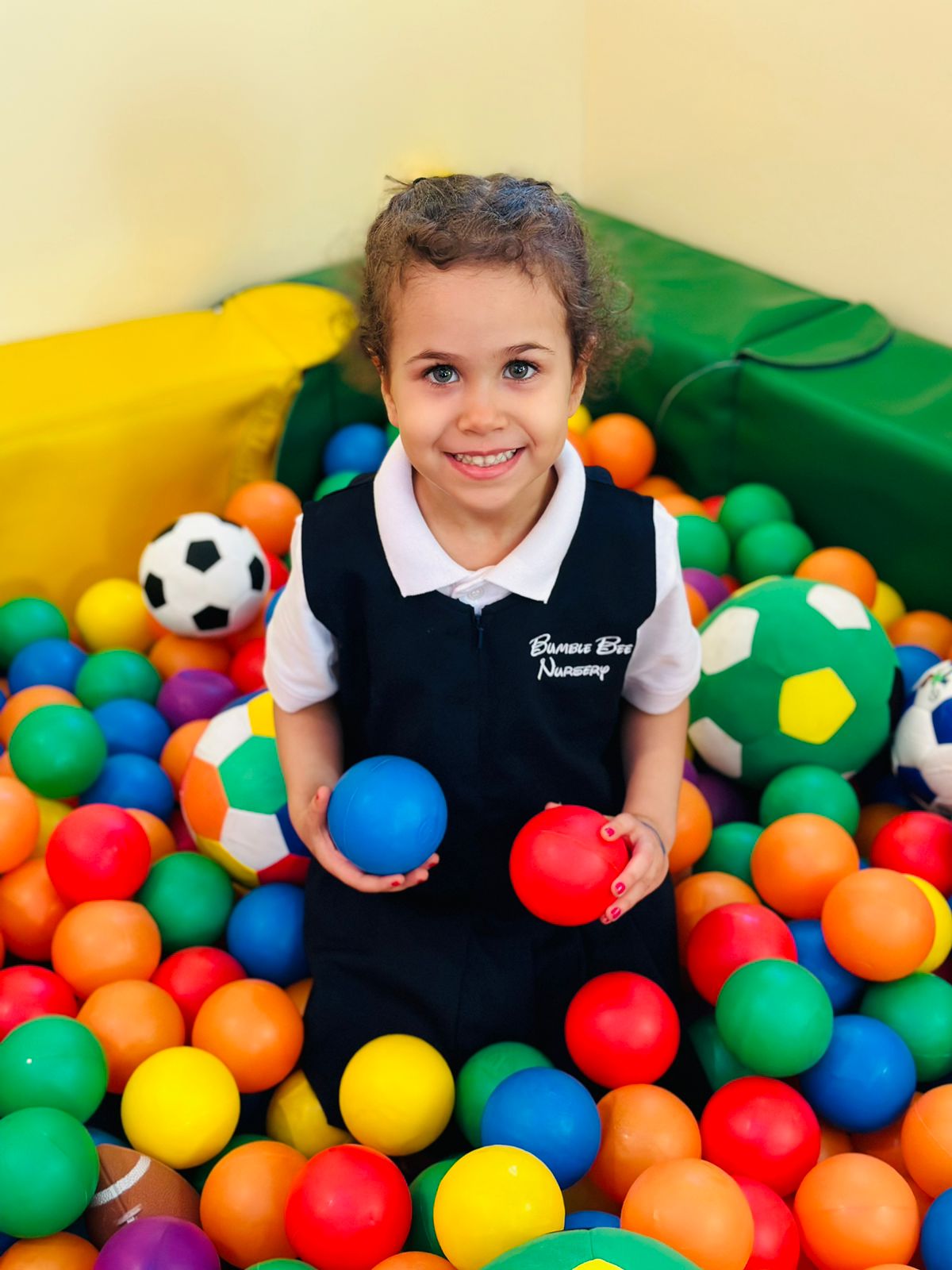
Music, movement, paint, junk modelling and — most importantly — role play. A child who spends twenty minutes running a pretend shop is practising language, negotiation, counting and imagination at the same time. Gymnastics and music sessions are part of the week here.
How the balance works: child-led and adult-guided
Two things shape every session.
Play your child leads. They choose what to explore. A teacher stays close, asks the right question at the right moment, and steps back again. This is where most of the day’s learning sits, and it is the part that is easiest to waste.
Learning we guide. Focused sessions in early language, numbers and motor skills — still through play, but with a clear purpose behind each activity.
The EYFS and its Early Learning Goals leave enough room for teachers to follow a child’s interests rather than a script. If four children become fascinated by a beetle in the garden, that is worth ten minutes of the morning, and a good teacher will take it.
A morning, as it actually runs
Children arrive from 7:00 AM. A cuddle if one is needed, then a choice of where to start — nobody is hurried into the room.
The morning holds a focused EYFS session, then snack, outdoor play, story and music. Snack time does more language work than most planned activities: pouring, sharing, naming what is on the plate, noticing there are three pieces and four children. Tidying up is sorting by shape and colour, and finishing what you started.
At pickup you get a written note telling you what your child actually did. Classes run Monday to Thursday, 7:00 AM to 5:30 PM, and Friday 8:00 AM to 11:30 AM.
How we assess without testing
Because the learning is scattered through the day rather than delivered in lessons, it has to be noticed rather than marked. Our teachers observe and record — a short note, sometimes a photograph — building a picture over weeks of where each child sits in each of the seven areas.
That is what feeds your progress report. It is not a score and not a comparison with other children. It says what your child can do, what they are close to doing, and what we are setting up next. Children reach the Early Learning Goals at genuinely different times, and the report reflects that rather than hiding it.
You also hear from us through our parent app, with updates on activities and progress during the term, alongside parent–teacher meetings.
What we expect of ourselves
Three things, in our own words rather than the framework’s.
Every child gets the same quality of attention. Not the same activities — the point of observation-led teaching is that children get what they are ready for. But the same care in noticing.
Planning follows the child, and gets reviewed. What we set up in October should not be what we set up in March, because the child has moved.
Parents are part of it. You know things about your child we cannot see in a classroom, and the handover at pickup works in both directions.
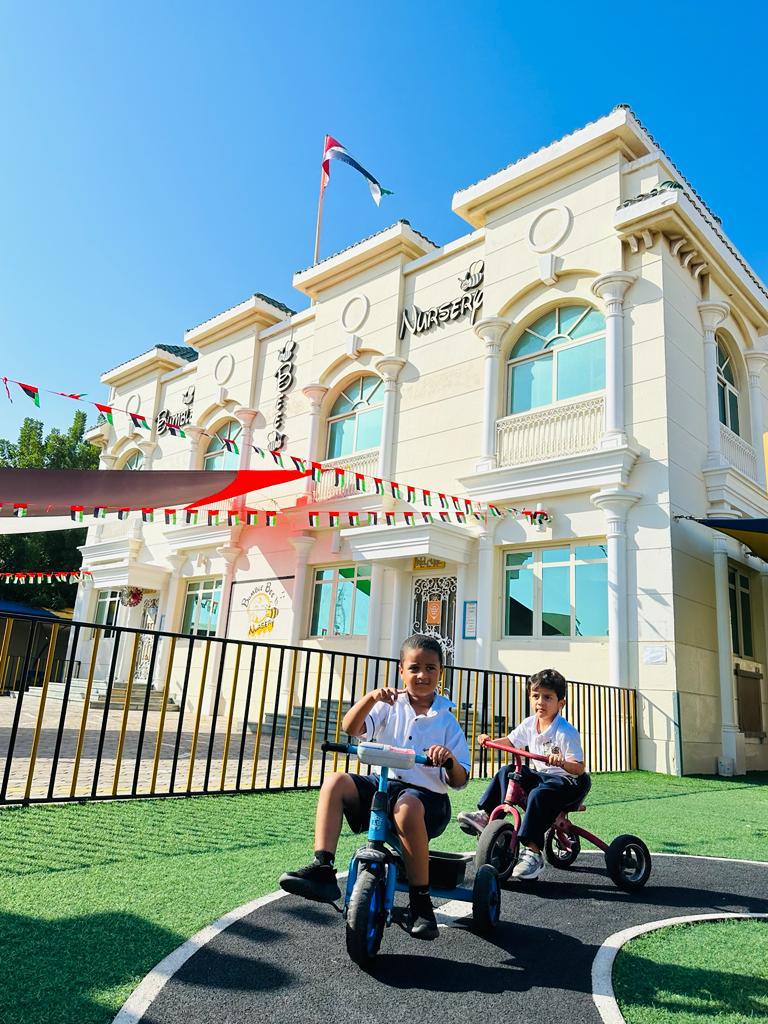
We are licensed by the Sharjah Private Education Authority and have operated from the same building on Burj Khuzam Street since April 2008. Our indoor and outdoor spaces are built for children who need to move before they can concentrate, with CCTV throughout the classrooms and common areas and secure entry.
Questions parents ask
Is the EYFS academic enough?
It is less formal than parents often expect, and that is the design. Children who are physically confident, verbally fluent and emotionally settled learn to read and write quickly when the time comes. Children pushed into formal work before those foundations are in place tend to struggle later.
Why don’t you combine EYFS with Montessori or a STEM programme?
Because each of those approaches is coherent on its own terms and rests on different assumptions about how young children learn. Running several at once usually means running none of them fully. We would rather do one thing thoroughly.
How will I know if my child is behind?
You will know, because we will tell you — not at the end of the year, but as soon as it is a real pattern rather than a bad week. The observation record exists precisely so that nothing is a surprise in June.
Do children get homework?
No. What helps at home is talking, reading together, and letting them do things slowly for themselves — pouring their own water, managing their own shoes.
Does the EYFS prepare my child for school in the UAE?
Yes. It feeds naturally into FS1 and KG1 at British-curriculum schools, and the school-readiness work in our preschool year covers sitting for a story, following instructions and early letters and numbers.
What ages do you follow the EYFS for?
Children from 1.5 to 4 years, across three age groups: roughly 1.5–2.5, 2–3, and 3–4.
Come and watch a session
The seven areas make far more sense when you can see them happening. Come mid-morning, when the rooms are busy, and watch one session from start to finish. Twenty minutes, no commitment.
Bumble Bee Nursery, Villa 3 & 4, Burj Khuzam Street, Al Ramla, Sharjah — behind the Sharjah Red Crescent Society. Call 06 522 8461, WhatsApp 050 929 0452, or see how admissions work.
You can also read more about what our nursery fees cover, or how full-day daycare works if you need longer hours.